Kettlebell Sport
Disciplines & Competition Formats
Three basic movements, different challenges: in kettlebell sport, what counts are technically valid repetitions within a set time. Here you can see how the movements differ and in which formats you can compete.
The three basic movements
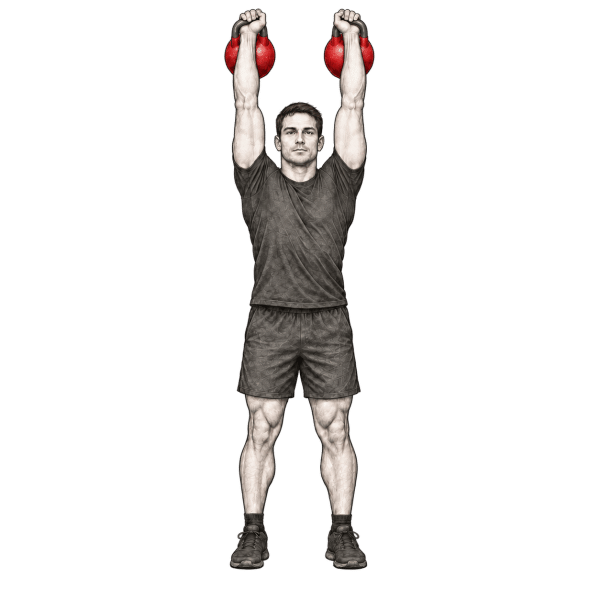
Jerk
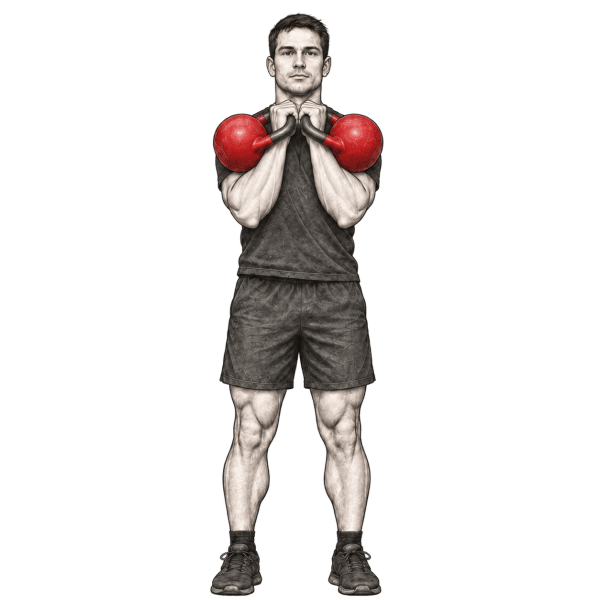
From the rack
From the rack position – the rest position in front of the upper body – the kettlebells are driven overhead with the help of the legs. After a controlled fixation, they return to the rack position.
Between repetitions, the kettlebells stay in front of the upper body; they are not cleaned again each time.
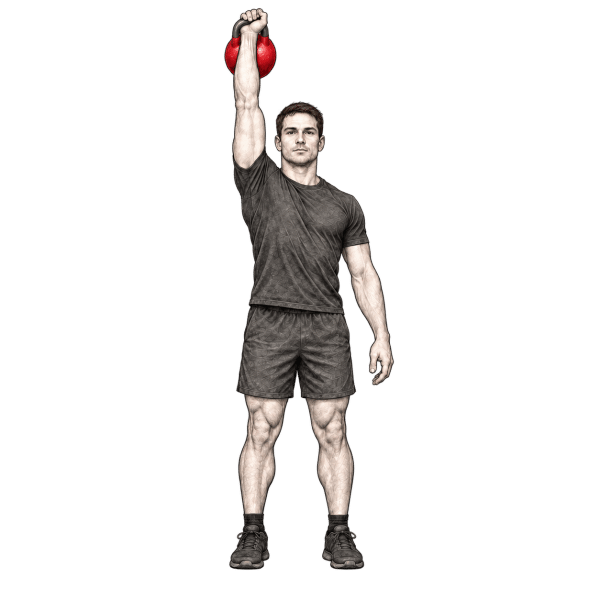
Snatch
From the backswing
A kettlebell is brought overhead with one hand from the backswing in one fluid movement. There it is fixated with a straight arm in a controlled manner before the next repetition begins.
How often you may switch hands depends on the competition format.
Long Cycle
Clean and jerk
Each repetition begins with a clean from the backswing into the rack position. The kettlebells are then jerked overhead and fixated in a controlled manner.
Unlike the jerk, a new clean is part of every repetition.
One- or two-arm variations and permitted kettlebell weights depend on the competition class, rules and competition announcement. The step sequences are for orientation only and do not replace technical coaching.
Which competition format is behind it?
The discipline describes the movement. The format defines, among other things, duration, combination and team scoring.
Not every event offers all formats. Before registering, check the disciplines, competition classes, weights and hand switches offered in the respective competition announcement.
Your next step
Find a suitable competition and read its announcement. The rules explain which technique counts and which requirements apply to your participation.