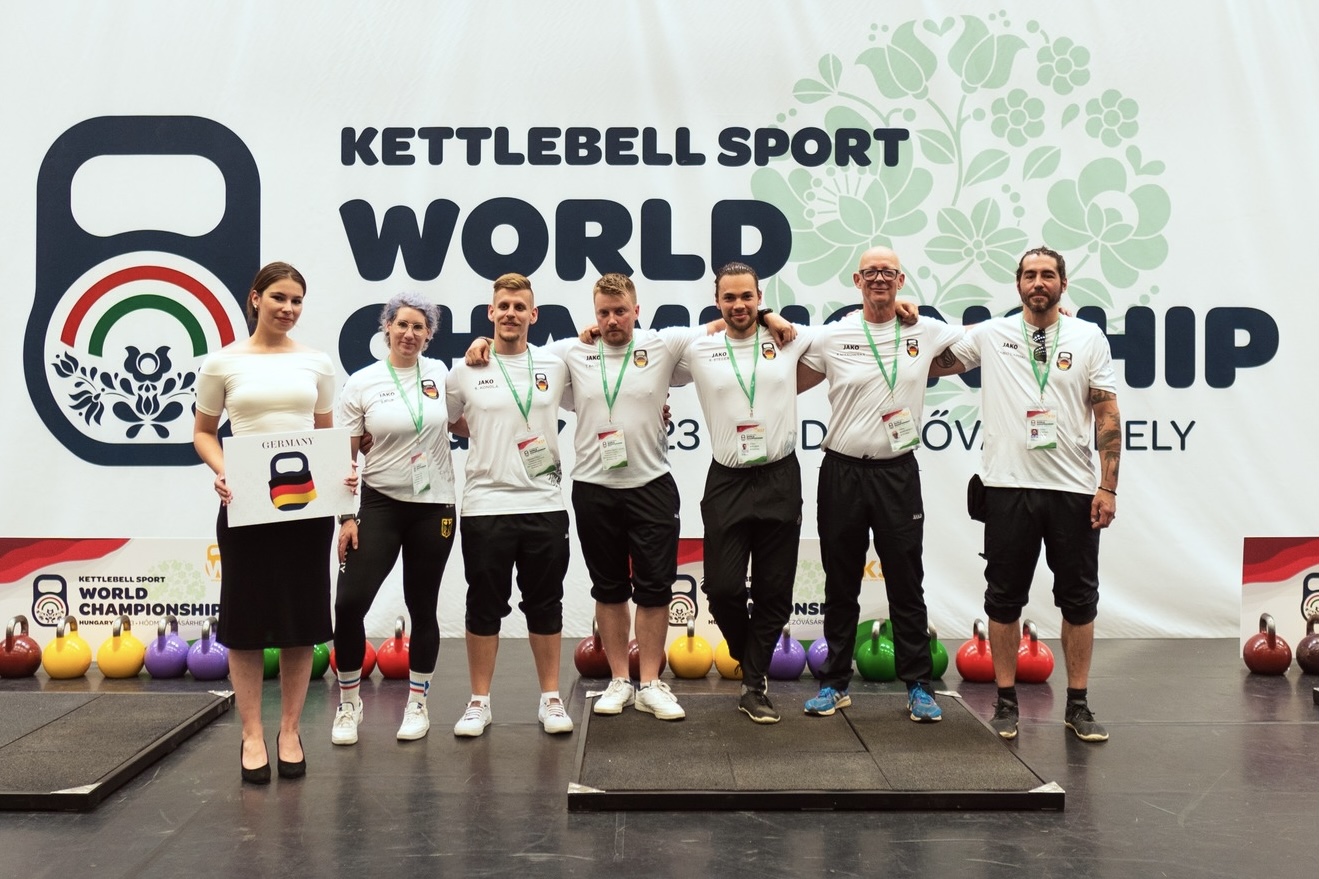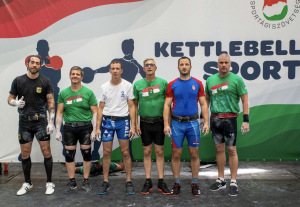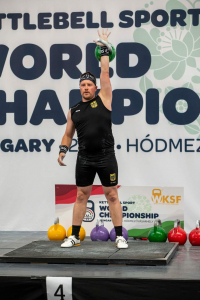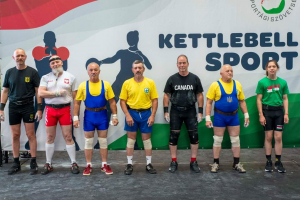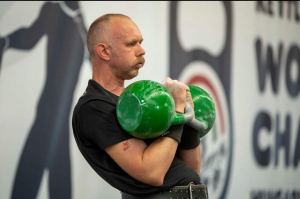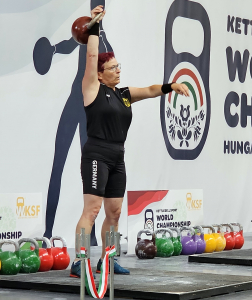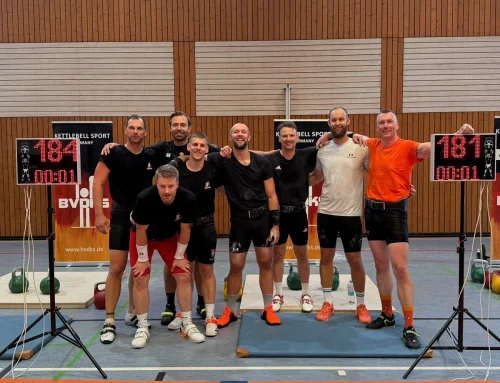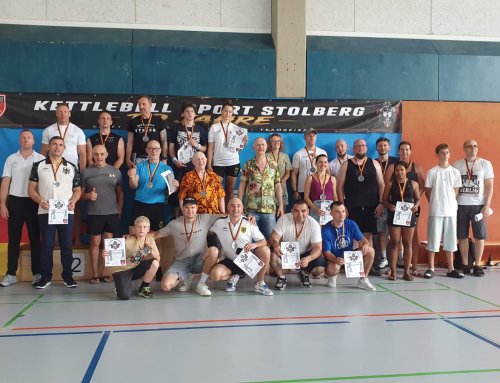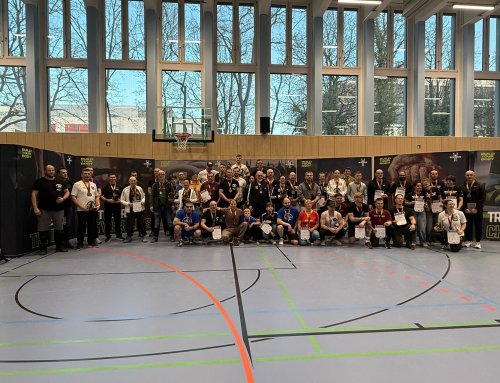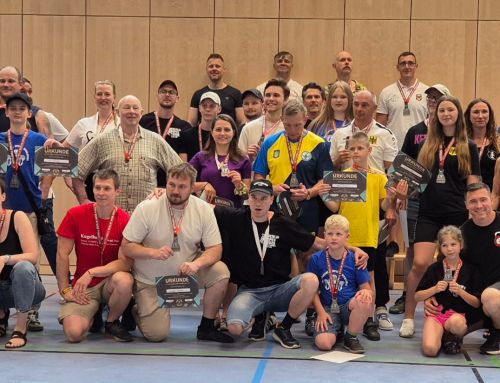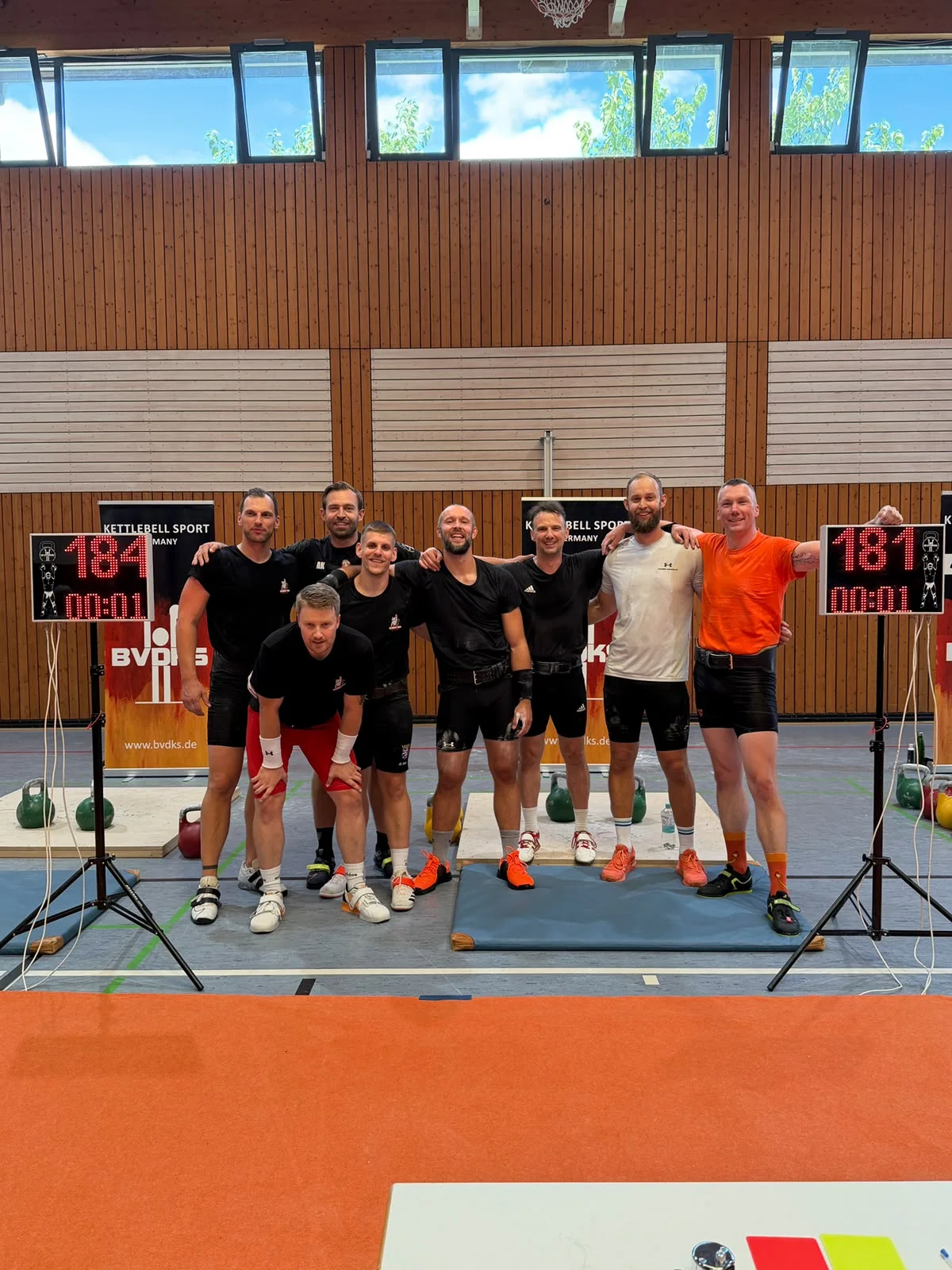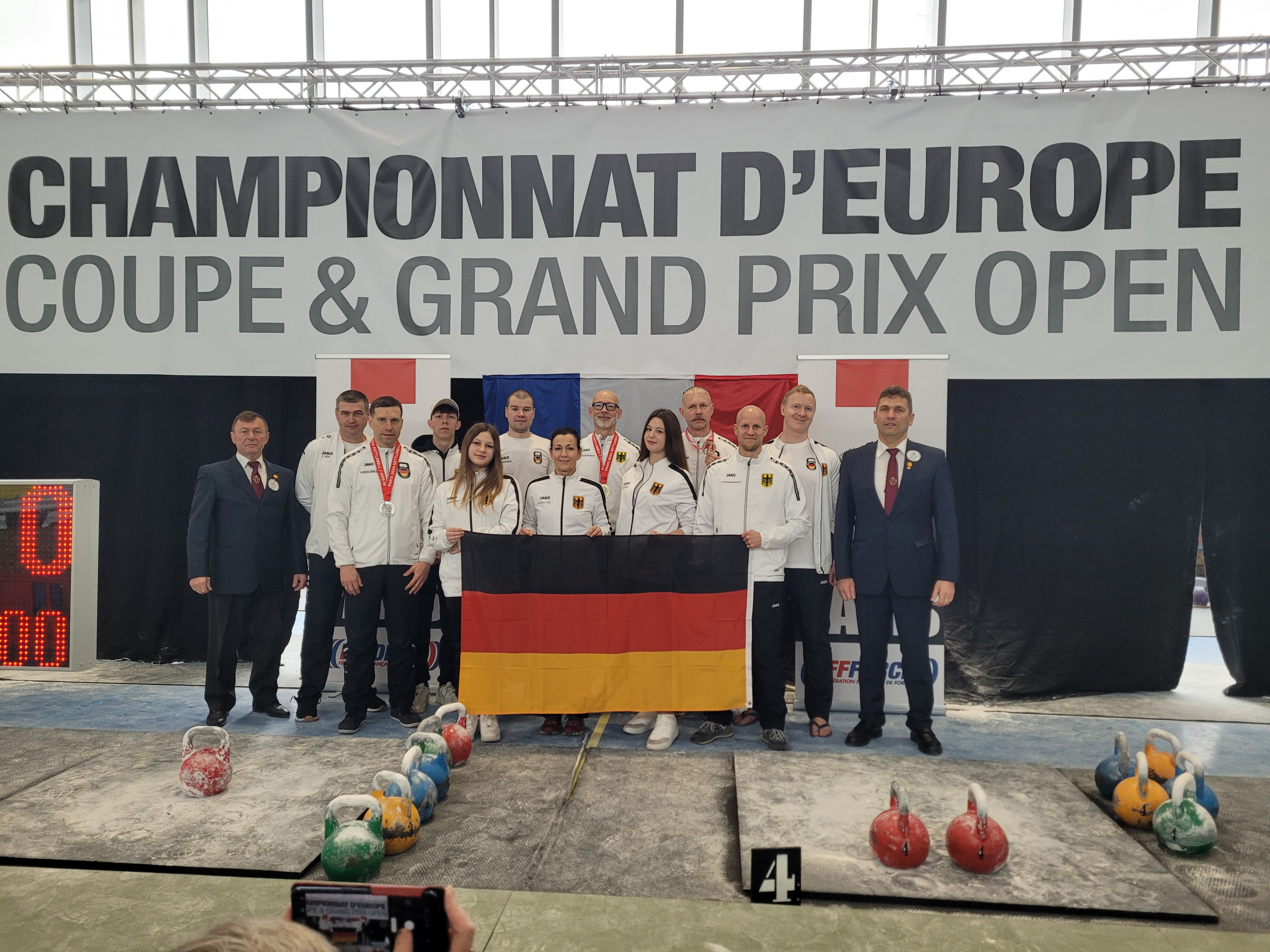
At the end of June, the time had come for nine athletes from Germany: they set off on an adventurous journey to Hungary to prove their skills at the WKSF Kettlebell Sport World Championship from 22 to 25 June 2023. This was preceded by qualification at the German Championships in February and weeks of hard preparation for the competition.
Arrival and opening ceremony
As the competition took place not in Budapest – as originally planned – but in the rather rural town of Hódmezővásárhely, about 190 km to the south-east, just getting there was a challenge. With temperatures of almost 40 °C, the athletes were sweating by the time they finally reached the sports hall on Thursday afternoon.
After registering the team and successfully weighing in the athletes, the opening ceremony in the evening kicked off the days ahead. More than 500 participants from 32 nations marched into the sports hall and were ceremonially welcomed. The German team was represented by six of our athletes and got in the mood for the competitions. The programme went on until late in the evening: Hungarian athletes demonstrated their kettlebell juggling skills, followed by a traditional dance group performing Hungarian folklore.
After a strenuous day of travel, our athletes then wound down in the evening and prepared themselves mentally once more for the competition ahead – because the long cyclers were already starting the next day.
Competition day 1 – Long Cycle
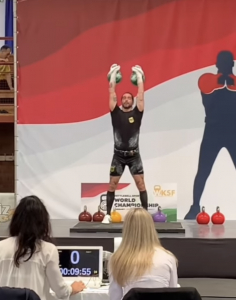
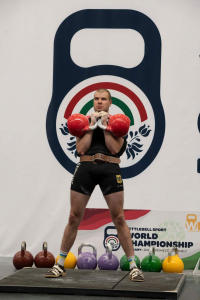
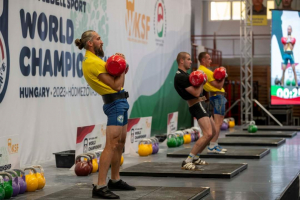
On Friday, Sebastian Kondla, Sascha Steger, Fabio Cappai and Silvia Hoch competed in the long cycle. With temperatures of over 40 °C in the hall and brand-new kettlebells, the competition conditions were anything but ideal. Nevertheless, our athletes delivered outstanding performances and were cheered on loudly by the German team.
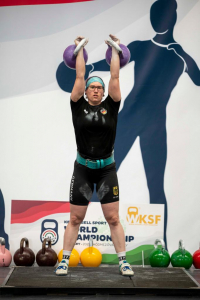
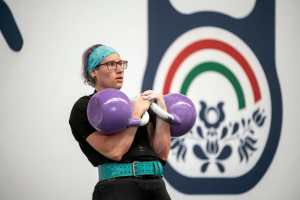
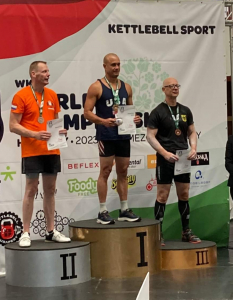
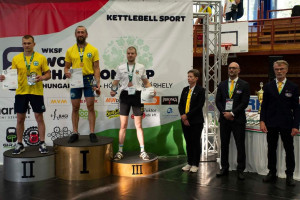
Sebastian Kondla started things off and confidently prevailed against strong competition from Moldova and Spain. With a personal best, he won the gold medal and with it the world title. Sascha Steger competed straight away in the next flight. An exciting final sprint secured him the silver medal behind the Czech Republic and ahead of the USA. Shortly afterwards, Fabio Cappai took to the platform and competed for the German team in the masters category. Unfortunately, the previous year's world champion couldn't find his rhythm and had to set the kettlebells down early after initially taking the lead. The last German athlete, Silvia Hoch, competed in a strong flight in the professional class. Focused and calm, she fought her way through the ten minutes and achieved an excellent result.
At the end of the first day, the German team had achieved the following placings:
- Sebastian Kondla (Long Cycle Amateur 24 kg, 87 kg, 1st place)
- Sascha Steger (Long Cycle Amateur 24 kg, 95 kg, 2nd place)
- Fabio Cappai (Long Cycle Master 40-49y 24 kg, 95/+95 kg, 4th place)
- Silvia Hoch (Long Cycle Elite 20 kg, 65/75/+75 kg, 5th place)
At a joint dinner in a Hungarian restaurant, the team celebrated its first successes and let the competition day draw to a relaxed close. Later, in their hotel rooms, the biathletes slowly but surely got ready for their sets the following day. Outside, it was raining heavily, a severe thunderstorm was brewing, and suddenly the power went out all over Hódmezővásárhely. The change in the weather came at just the right time: the next morning was much cooler than the previous days – ideal conditions for more successful sets.
Competition day 2 – Biathlon
On Saturday, too, the flights started early in the morning because of the high number of participants. The amateurs competed in the morning, followed by the masters, while the pros could be admired in the afternoon. In kettlebell biathlon, athletes compete in two individual disciplines: the jerk and the snatch. As the two disciplines are added together for the final result, there are often exciting duels and interesting twists.
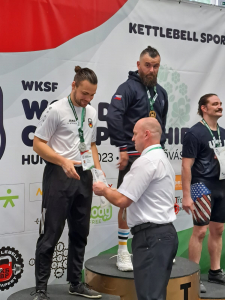
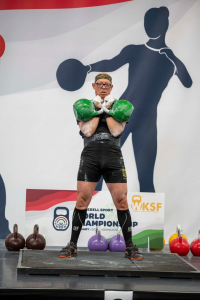
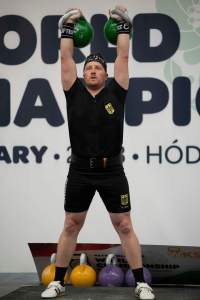
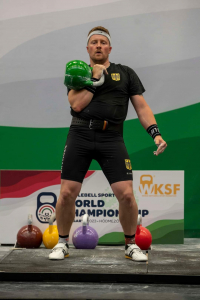
Torsten Baltz opened for the German team. After an exciting neck-and-neck race against a strong Brazilian athlete, he won the silver medal with an impressive performance. Stefan Makowsky then competed in the masters category and scored particularly well with his strong snatch result. He secured the bronze medal for the German team. Next, Vladislav Shamardin took to the platform. In the masters category, he left most of the competition behind with a strong result and took 2nd place. Mykola Mosiichuk competed shortly afterwards in the professional class and delivered an impressive performance that was rewarded with the bronze medal. As the last athlete of the day, Christine Wanner showed her skills in the snatch. With a personal best, she secured the silver medal in the masters category.
The second day of competition also brought the German team very good placings and several medals:
- Torsten Baltz (Biathlon Amateur 24 kg, 87/95/+95 kg, 2nd place)
- Stefan Makowsky (Biathlon Master 50-59y 24 kg, 80/87 kg, 3rd place)
- Vladislav Shamardin (Biathlon Master 50-59y 24 kg, 90/+95 kg, 2nd place)
- Mykola Mosiichuk (Biathlon Elite 32 kg, 80/87/95 kg, 3rd place)
- Christine Wanner (Snatch Master 55-64y 12 kg, 75/+75 kg, 2nd place)
First-class organisation with minor flaws
For the spectators and the teams creating an atmosphere in the hall, however, it was not always easy to follow the competition. Unfortunately, there were no screens, which would normally display the repetition counts clearly for the audience. In addition, under the new WKSF rules, several weight classes were combined when participant numbers were low in order to increase the sporting challenge for the athletes. For reasons of fairness, however, the lighter athletes were given an advantage: their repetition counts were calculated with a higher coefficient than those of the heavier weight classes – whoever achieves the highest result this way wins. However, this meant that spectators and athletes often only found out from the protocols afterwards who had won the flight. Apart from that, the World Championship was very well organised by a friendly WKSF team and the hosts.
Competition day 3 – Half marathon
Slowly, the World Championship was coming to an end, and some of our athletes already had to prepare for their departure. Before that, of course, the athletes celebrated the successes achieved so far, enjoyed Hungarian cuisine once again and were already making plans for training in the coming months.
Sunday, the last day of the World Championship, was entirely devoted to the kettlebell half marathon. The aim is to lift the kettlebell for 30 minutes. Hand switches are allowed as often as you like, but under no circumstances may the weight be set down early, otherwise the athlete is disqualified. Torsten Baltz competed for the German team in the one arm jerk and showed no sign that he had already delivered top performances in the biathlon the day before. With 541 repetitions, he secured the bronze medal and at the same time set a new German record:
- Torsten Baltz (HM OAJ Amateur 24 kg, 74/87/+87 kg, 3rd place)
Germany 13th in the overall ranking
After the last competitions, it was time for the remaining athletes to say goodbye. To close this year's World Championship, the best teams were honoured at a final award ceremony. Italy took first place, followed by Ukraine and the USA. With one gold, four silver and three bronze medals, Germany finished 13th. The German kettlebell athletes can be proud of this achievement.
As always at such an event, participants don't just take home medals and trophies. It is above all the experiences and wonderful moments that will stay in their memories for a long time. Sport brings people together and often even creates real friendships. All athletes have since arrived safely back home and are already looking forward to the next World Championship.
Silvia Hoch & Sascha Steger
Images for this post